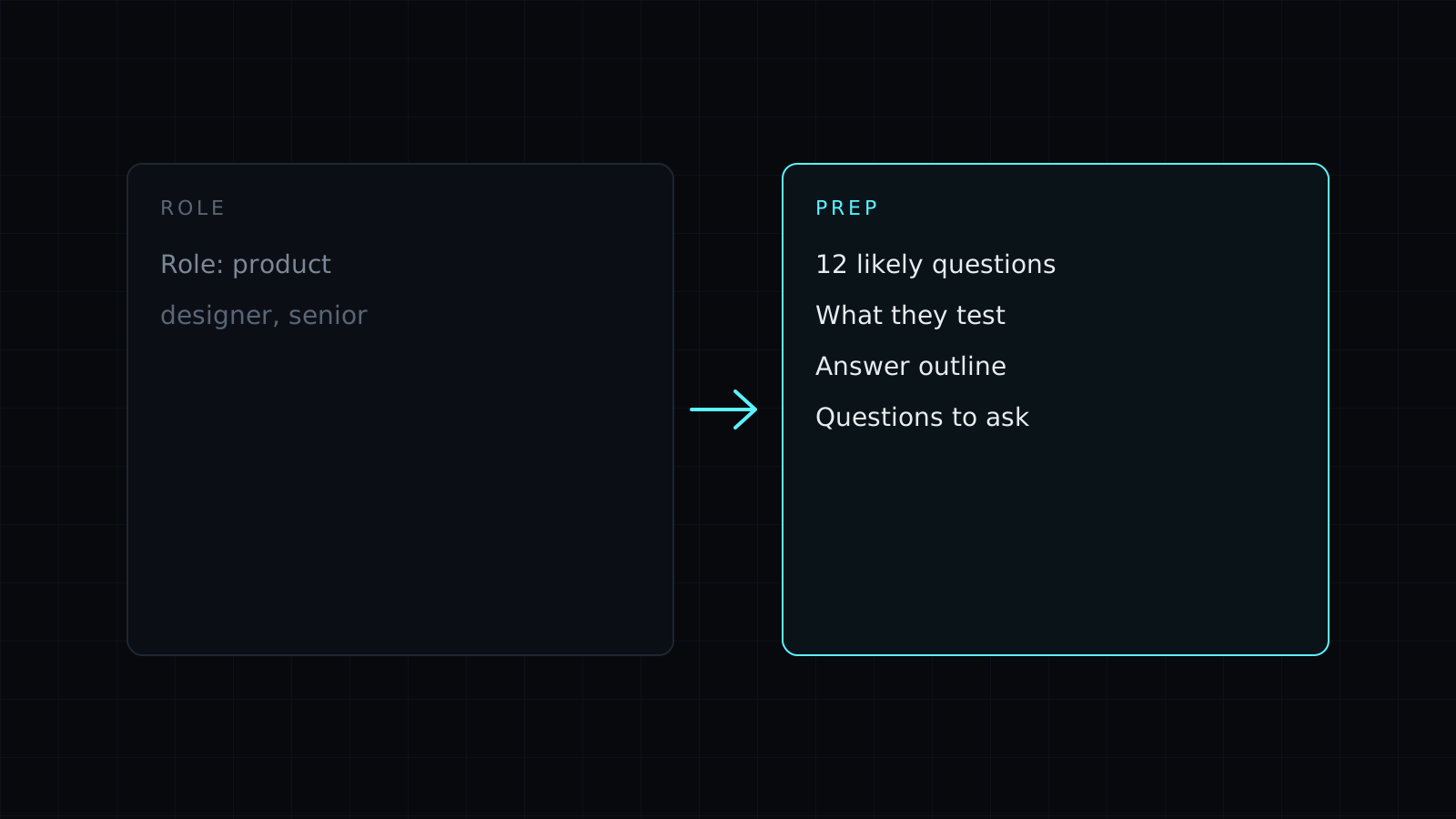
This prompt predicts the interview questions you’re most likely to face for a specific role and level, explains what each one is testing and outlines an answer from your own experience. You give it the role, the level, your background and, if you have it, the job ad. It returns the questions grouped by type, answer outlines and a few sharp questions to ask at the end.
What interview questions should I prepare for
Most interviews mix three kinds of question. Behavioral questions ask about the past: a conflict with a colleague, a project that failed, a time you led without authority. Role-specific questions check the skills the job needs, and they change a lot between a junior analyst and a senior engineering manager. Situational questions ask what you would do in a scenario. Knowing what a question is testing matters more than memorising an answer. “Tell me about a failure” is usually about self-awareness and what you changed, not about the failure itself.
Answers built from your real experience
For every question, the prompt picks which part of your background to use and lists the points to hit. Behavioral answers follow STAR: situation, task, action, result. If you want to develop one story into a full answer, the STAR Method Answers prompt does that step.
The prompt never invents experience, results or employers. When an answer needs a detail you didn’t give, it leaves a clear marker and says what kind of example would work. It also lists the questions your background doesn’t cover well and how to answer them honestly, which is often where candidates get caught out.
Questions to ask the interviewer
You also get five questions to ask at the end, fitted to the role and level and not already answered by the job ad. Good questions show you’ve thought about the work, and the answers help you decide whether you want the job.
Who it’s for
- Job seekers preparing for a first-round or final interview.
- People changing careers who need to map old experience to a new role.
- Graduates facing their first panel or behavioral interview.
FAQ
How many interview questions should I prepare?
Prepare outlines for the 12 to 15 most likely questions and practise the three or four that matter most out loud. The prompt tells you which ones to start with.
Should I write out my answers word for word?
No. The prompt writes outlines on purpose. Bullet points you can speak from sound natural; a memorised script sounds rehearsed.