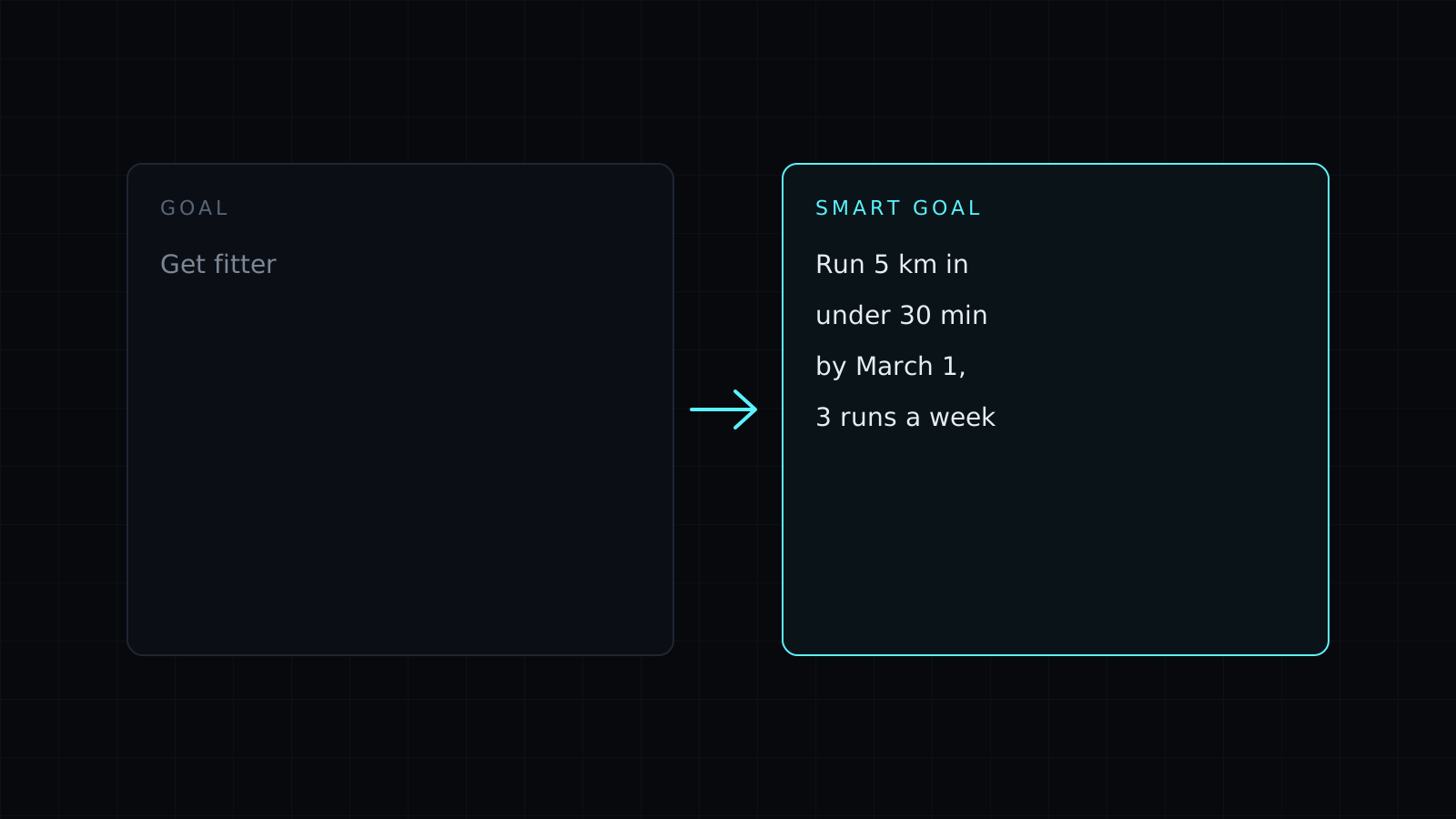
This prompt turns a vague intention into smart goals: goals that are specific, measurable, achievable, relevant and time-bound, with milestones on the way and one first step you can take this week.
What are smart goals
SMART is a checklist for writing a goal so you can tell whether you reached it. “Get in shape” fails most of the letters: it says nothing about what, how much or by when. “Run 5 km without stopping by the end of June, training three times a week” passes all five. Smart goals are not about ambition: they tell you on any given day whether you’re on track.
How to write a SMART goal that sticks
Most goals go wrong in two places: a missing or made-up number, and the gap between the goal and the first action. A deadline six months away gives you no reason to start on Monday. Milestones and a small first step close that gap.
What the prompt gives you
You get your goal rewritten as one sentence, then checked letter by letter, each marked as passing or needing a fix with a note on what’s missing. If what you wrote is really three goals in one, it splits them and tells you which to start with. Then come three to five milestones with dates, a first step that takes under an hour, and one weekly measure to track.
When a number is missing
The prompt never makes up your starting point, your target or your deadline. If the goal needs a number you didn’t give, it asks for it at the top and leaves a clear stand-in until you answer.
Who it’s for
- Anyone setting personal goals for fitness, money, learning or habits.
- Managers and teams writing quarterly goals.
- Students planning a semester or a big project.
FAQ
How many smart goals should I have at once?
Fewer than you think. One to three active goals is easier to keep up than a long list. The prompt splits a crowded goal and tells you which one to start with.
What if my goal can’t be measured with a number?
Use evidence instead: a finished draft, a sent application, a habit done on a set number of days. The measurable part only needs a clear sign that it’s done.