An elevator pitch is a short explanation of what you do and why it matters, and this prompt writes yours in three lengths for the audience you’re facing. You give it what you do, who you’re pitching to, the problem you solve, the result and what you want from the listener, and it writes 10, 30 and 60-second versions plus one line people remember.
What a good elevator pitch sounds like
Most pitches fail in the first sentence by describing a job title or a product category. The listener nods and forgets. A good elevator pitch starts with who you help and what changes for them, uses words anyone understands and ends with a clear next step. It also changes with the audience: an investor wants the problem, the market and traction, while someone at a networking event mostly needs to know who would be a good introduction.
Three lengths and one line
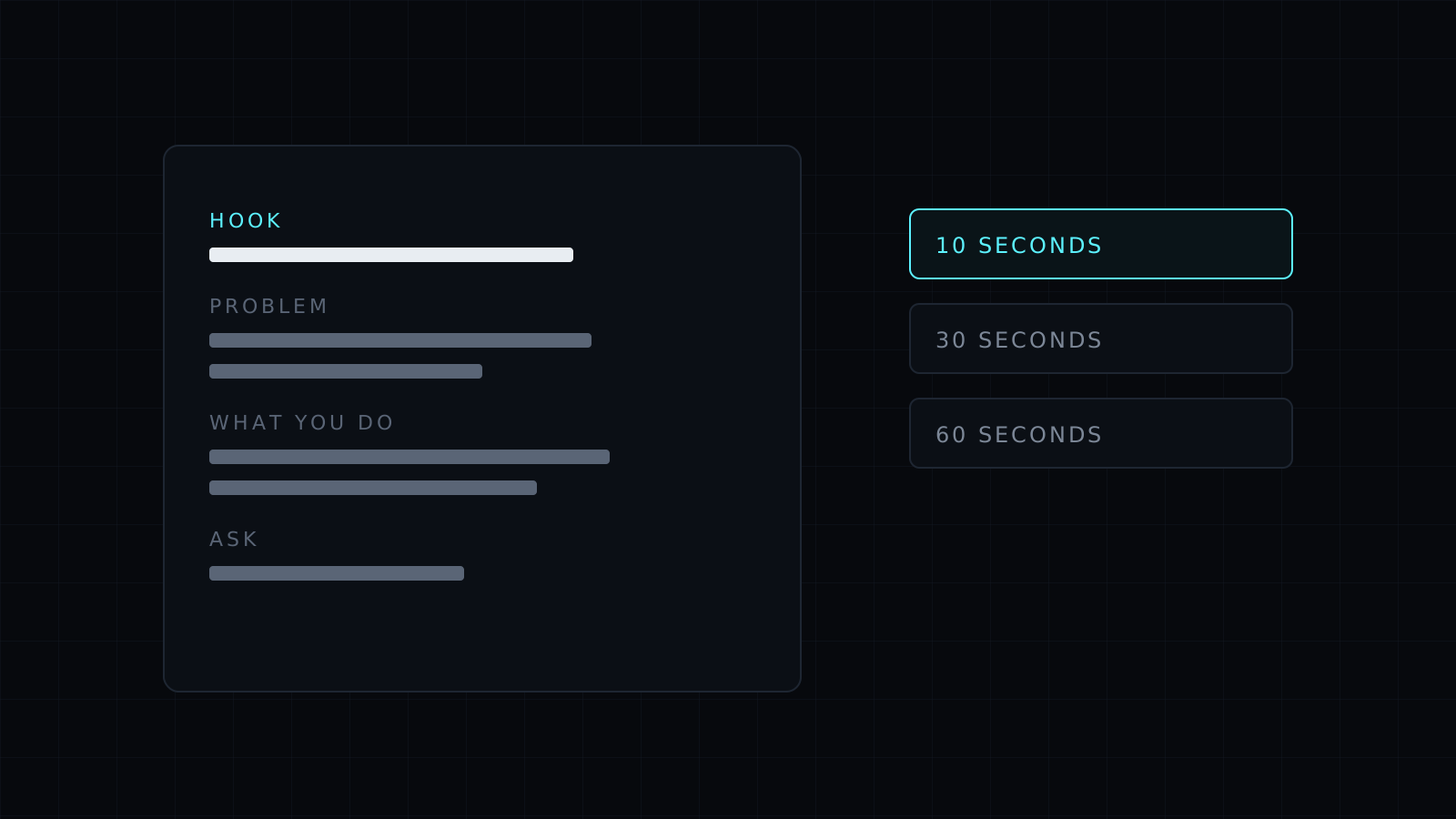
The 10-second version is one or two sentences about who you help and the result. The 30-second version adds the problem, what you do about it, your proof and the ask. The 60-second version adds why now or why you, and one concrete example from what you told it. Each comes with a word count so you can check the timing.
You also get one memorable line of twelve words or fewer, the sentence someone could repeat to a friend after meeting you, and a question to ask at the end that turns the pitch into a conversation.
Fitted to who is listening
The prompt adjusts every version for investors, clients, networking or a job search. It never invents traction, clients or numbers; with no proof yet, it leads with the problem and a clear example. It also cuts the phrases listeners tune out, so the pitch sounds natural spoken out loud.
Who it’s for
- Founders preparing for investor meetings or demo days.
- Freelancers and consultants who meet potential clients at events.
- Job seekers who need a sharp answer to “tell me about yourself”.
FAQ
How long should an elevator pitch be?
Around 30 seconds is the classic length, but it helps to have a shorter and a longer version ready. This prompt writes all three so you can match the moment.
Should I memorise my elevator pitch?
Know the structure and the key line by heart, but don’t recite word for word. Practise out loud until it sounds like you talking.
Can I use one pitch for every audience?
The core stays the same, but the emphasis should change. Fill the prompt again for each audience to get versions that fit.