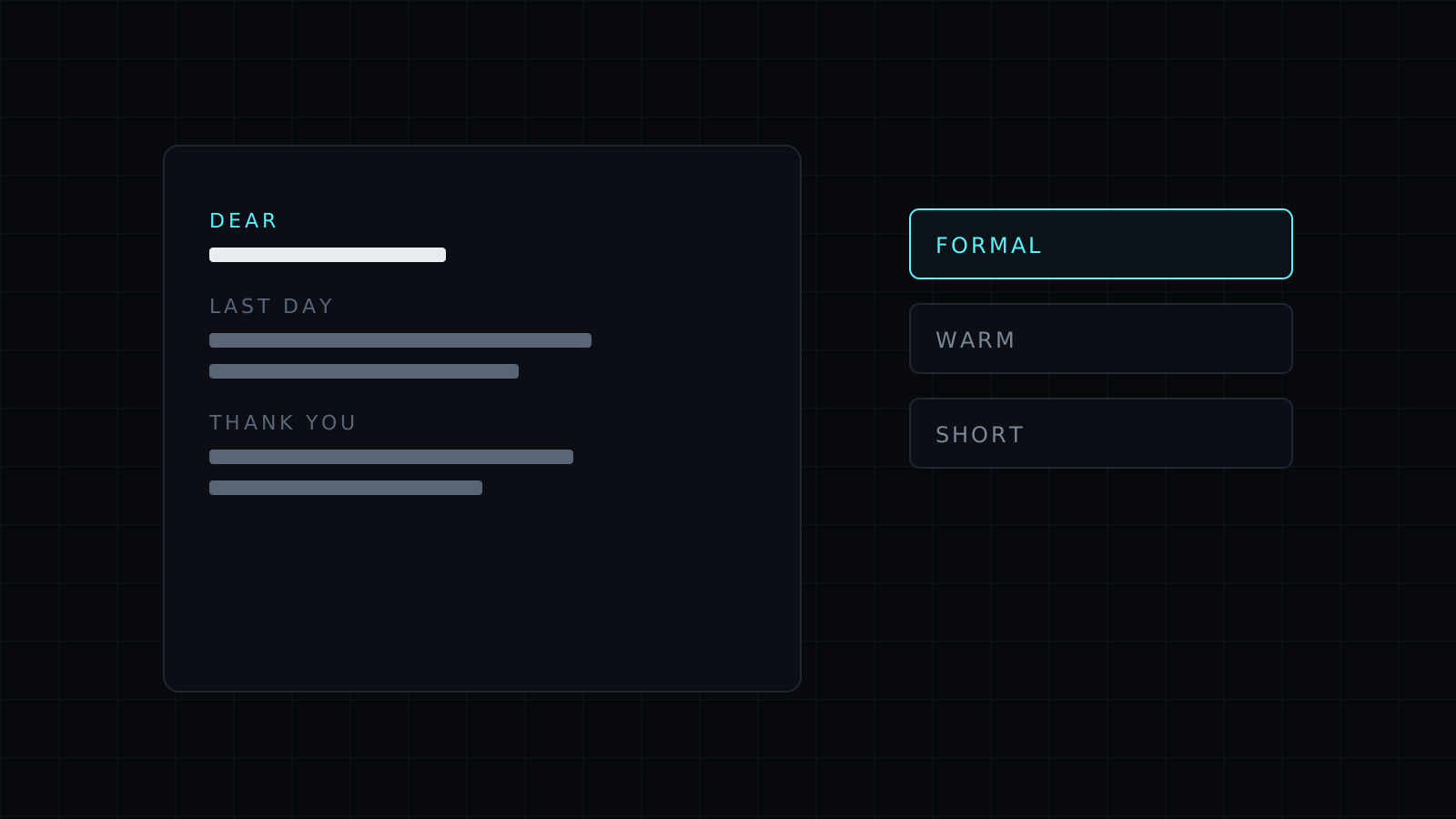
This prompt writes a resignation letter that states the facts, offers help with the handover and leaves the door open. You give it your name, your manager, the company, your role, your last day and the notice you’re giving, and it writes a formal and a warm version, plus a two-line email to send it.
What to include in a resignation letter
A good resignation letter is short. It says you are resigning in the first sentence, names your role and your last day, confirms the notice period and thanks the company. Many people add an offer to help with the transition, which makes the last weeks easier for everyone. What it leaves out matters just as much: complaints, long explanations and anything you wouldn’t want read aloud later. The letter often stays in your HR file.
How the prompt writes it
The prompt writes a formal version under 150 words and a warm version under 200 words with one or two sincere lines about what you valued. Then it writes a short email to your manager with a subject line, and three concrete ways to help with the handover, such as documenting your work or training a colleague, so you can pick the one you mean.
It ends with a line on whether to tell your manager in person first and how to start that conversation.
Leaving without burning bridges
The rules keep every version neutral. If your reason is negative, the prompt leaves it out or turns it into a plain, neutral line. It never invents achievements or dates, and it avoids over-apologising and promises you didn’t make. The result is a resignation letter you’d be comfortable having on file for years.
Who it’s for
- Anyone resigning who wants the letter done in minutes and done right.
- People leaving a difficult job who want to stay professional.
- Managers helping a team member write their notice.
FAQ
How much notice should a resignation letter give?
It depends on your contract and local practice; two weeks is common in the US, and many contracts in other countries ask for a month or more. The prompt uses the notice period you enter, so check your contract first.
Should I give a reason for resigning?
You don’t have to. The reason field is optional: leave it out and the letter simply states the facts. If you add one, the prompt keeps it short and neutral.
Formal or warm, which should I send?
Formal suits large companies and short tenures. Warm suits teams you were close to. Both include the same facts, so either is safe.