Conventional Commits Writer is a skill for Claude that turns your staged changes into commit messages that follow the Conventional Commits specification. You stage the work, ask Claude for the message, and get a typed, scoped subject line and a body that explains why the change was made, in the house style your repository already uses.
Why conventional commits?
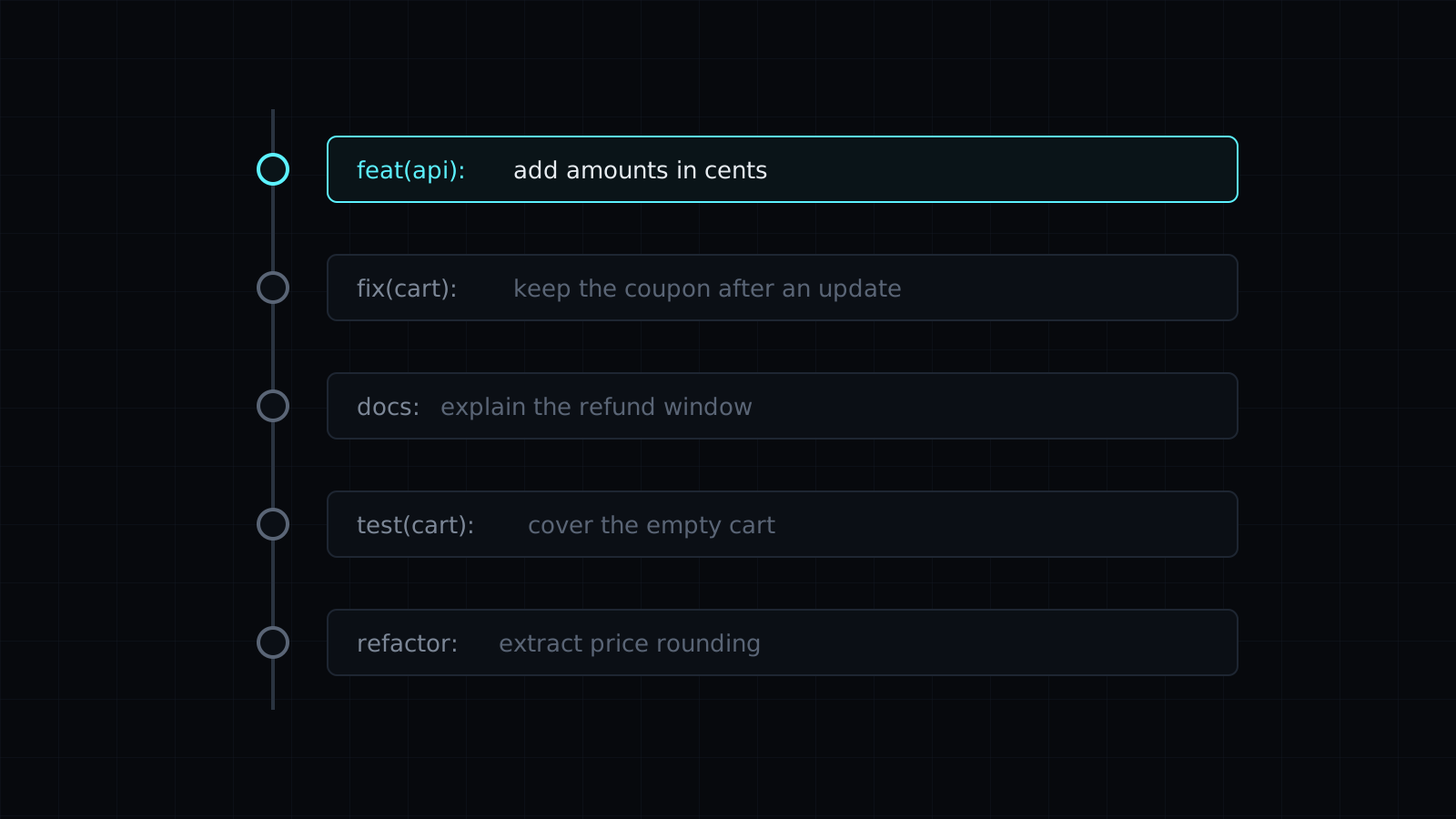
Conventional commits give every message the same shape: a type such as feat or fix, an optional scope, and a short subject, with breaking changes marked in a way tools understand. That shape is what lets release tools build a changelog and pick the next version number on their own. It also makes git log readable months later, when nobody remembers why a line changed.
The format is simple. Writing a good message every time is the hard part, especially at the end of a long session. This skill does that part.
How the skill writes the message
In Claude Code, the skill reads the staged diff and the last commits in your repository, so it picks up the scopes, ticket references and trailers your team already uses. If your project has a commitlint config or contributing guide, those rules win. It chooses the type by what the change means for the people using your code. It writes the subject in the imperative and keeps the body for the reason behind the change, not a retelling of the diff.
When a diff mixes unrelated work, it suggests splitting it into separate commits first and lists which files go where. It always shows you the message before anything is committed, and it never adds a reason the code and conversation don’t support.
Who it’s for
- Developers who use Claude Code and want clean history without thinking about it.
- Teams adopting conventional commits for automated changelogs and semantic versioning.
- Maintainers who review a lot of pull requests and want messages that explain themselves.