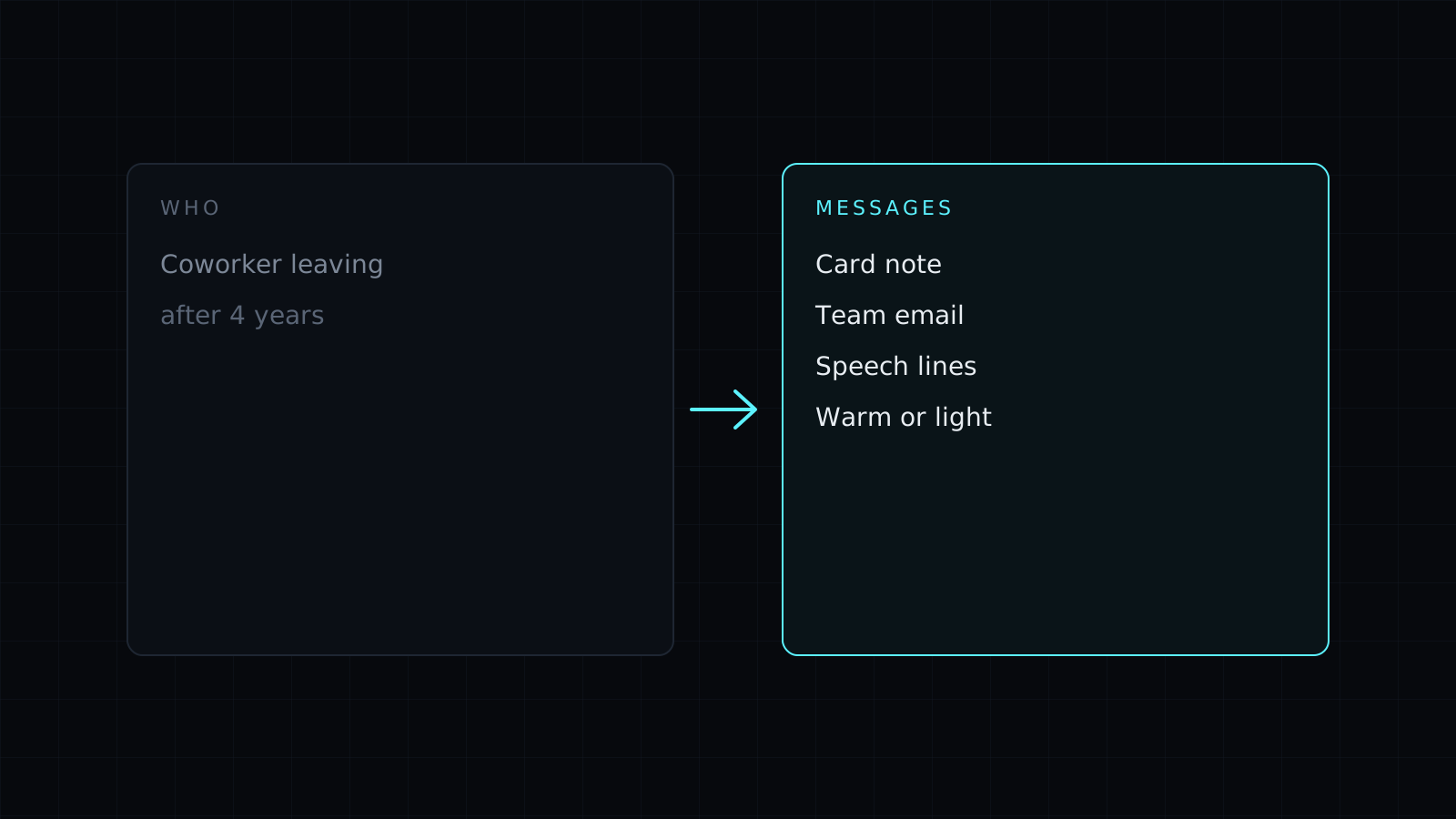
A farewell message is easy to get wrong in both directions, too generic or too much, and this prompt writes one that sounds like you meant it. You tell it who is leaving, how you know each other, a real moment or quality to mention and the tone you want, and it writes a card note, an email or a short speech, whichever you need.
What to write in a farewell message
The messages people keep are specific. Instead of “it was great working with you”, they mention a project you finished together, the way someone always made time for questions, or the joke that ran through every Monday meeting. A good farewell message says thank you, names something real and wishes the person well in what comes next.
For a coworker, a boss, a team or yourself
The prompt handles the common situations:
- A coworker leaving: a personal card note and a warm email.
- A boss leaving: respectful, with thanks for what they made possible.
- A team member leaving: something the whole group can sign or say.
- You leaving: an email to your team with your last day, a thank you and how to stay in touch, if you share it.
The card note stays under 50 words, the email under 150, and the speech runs about a minute, under 130 words, ending with a line everyone can raise a glass to.
For a colleague moving abroad after six years on your team, for example, the card note might mention the onboarding guide she wrote that everyone still uses, and the speech could close by wishing her well in the new city, with only the details you gave.
Warm, funny or formal
Warm suits close colleagues. Formal suits a manager or someone you know less well. Funny works when there are shared moments to draw on, and the prompt keeps the humour kind: never about the person’s flaws or why they’re leaving.
What it leaves out
No complaints about the company, no hints about why someone is going, and no invented memories or plans.
FAQ
How long should a farewell message be?
For a card, two to four sentences. For an email, a few short paragraphs. Shorter almost always reads better.
What do I write if I barely knew them?
Keep it formal and simple: thank them for their work, mention their role and wish them well.
Can I use it for a retirement?
Yes. Describe the person and what they’re moving on to, and choose a warm or formal tone.